Where Benefits Flow
Co-benefits are distributed across the UK, with patterns tied to population density, current challenges, and climate action opportunities.
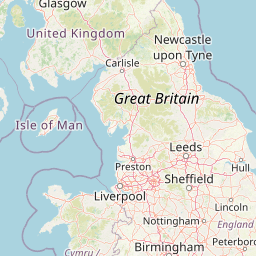
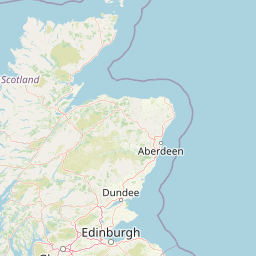
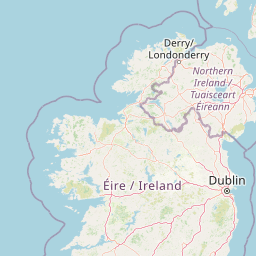




Ceredigion
W01002002
£70.98M
Total benefit
Barnet
E01000253
£45.08M
Total benefit
Three Rivers
E01023839
£44.38M
Total benefit
Bristol, City of
E01014714
£44.25M
Total benefit
Tandridge
E01030831
£43.86M
Total benefit
Chiltern
E01017751
£42.31M
Total benefit
Enfield
E01001568
£40.24M
Total benefit
Mole Valley
E01030540
£39.79M
Total benefit
Brentwood
E01021447
£39.57M
Total benefit
South Bucks
E01017822
£39.53M
Total benefit
West Berkshire
E01033851
£38.41M
Total benefit
Harrow
E01002225
£36.91M
Total benefit
Windsor and Maidenhead
E01016607
£35.84M
Total benefit
Enfield
E01001417
£35.06M
Total benefit
South Bucks
E01017815
£34.77M
Total benefit
Sutton
E01032623
£34.25M
Total benefit
Sutton
E01004114
£34.21M
Total benefit
Hillingdon
E01002473
£33.85M
Total benefit
Northumberland
E01033714
£33.58M
Total benefit
Woking
E01031003
£33.41M
Total benefit
Regional Analysis
Analysis of co-benefits patterns across 391 UK local authorities reveals important correlations with temperature, energy performance, and economic factors.
Temperature Pattern
Latitude Correlation: 0.048
Co-benefits are evenly distributed across temperature zones. No evidence that colder northern or warmer southern areas systematically benefit more. Both heating and cooling interventions provide substantial value across the UK.
Energy Performance
Per-Area Correlation: -0.366
Areas with poorer EPC ratings (typically older housing stock in urban centers) show higher absolute co-benefits. Urban vs rural differences matter more than North-South divide for energy efficiency gains.
GDP Pattern
Regional Analysis
The Midlands shows highest average benefits (£406M), not the traditionally wealthier South. Economic benefits cross income levels—climate action ROI is viable across diverse prosperity contexts.
Highest Benefit Areas
Local authorities with the most positive climate action impact
- 1.City of London
- 2.Isles of Scilly
- 3.Tower Hamlets
- 4.Shetland Islands
- 5.Na h-Eileanan Siar
Lowest Benefit Areas
Large LAs with many small areas (less negative = more cost)
- 1.Birmingham
- 2.Leeds
- 3.Cornwall
- 4.Wiltshire
- 5.Sheffield
Policy Implications
Universal Applicability
Climate interventions beneficial nationwide
No Temperature Bias
Both heating and cooling strategies valuable
Urban Focus
Dense urban areas show highest per-area benefits
Economic Equity
Benefits accessible across prosperity spectrum
Analysis based on 391 UK local authorities covering 46,428 small areas. Correlation analysis uses latitude as temperature proxy and examines per-area benefit distribution patterns.
Data source: Edinburgh Climate Change Institute, UK Co-Benefits Atlas (www.ukcobenefitsatlas.net). Weather data from Met Office. Energy Performance Certificate (EPC) data from EPC Open Data Communities. GDP data from data.gov.uk. Analysis aggregated across 391 UK local authorities. Coverage: 46,426 small areas, 2025-2050.